94% of employees say they would stay longer at a company that invests in their learning and development, according to LinkedIn Learning.
For retailers, this insight highlights a growing challenge: how do you provide meaningful learning opportunities to frontline employees who spend most of their day serving customers, managing inventory, and keeping store operations running smoothly?
Traditional training methods often struggle to fit into the realities of retail work. Long courses can be difficult to schedule, while information overload can limit knowledge retention.
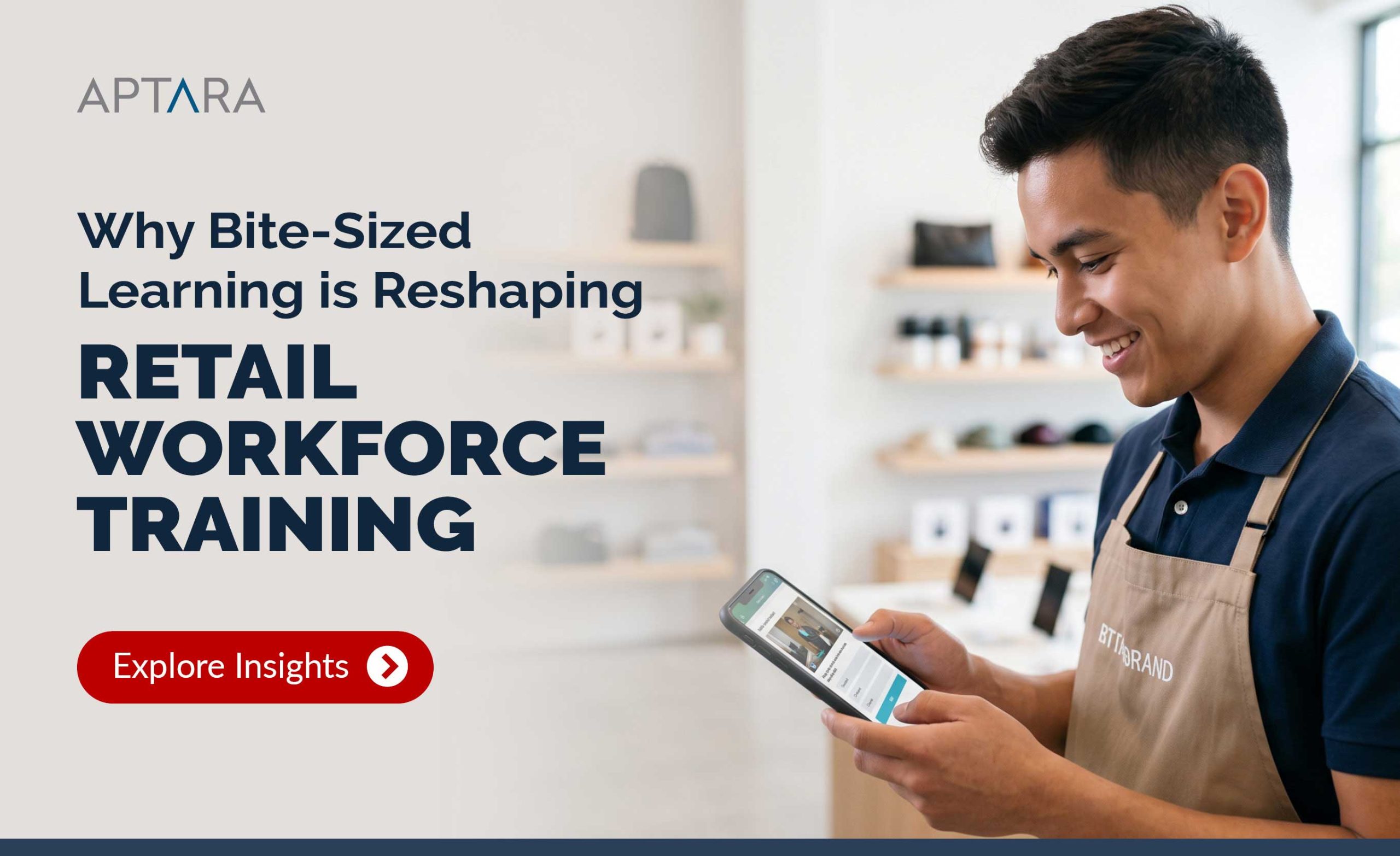
Microlearning is changing that by delivering short, focused learning experiences that employees can access whenever they need them.
What Is Microlearning and Why Does It Work in Retail?
Microlearning is a training approach that delivers content in small, targeted learning modules typically lasting between two and ten minutes.
Rather than overwhelming employees with large amounts of information at once, microlearning focuses on one concept, task, or skill at a time.
This format aligns naturally with retail work environments because learning can happen during shift transitions, breaks, or moments between customer interactions.
Its effectiveness is also supported by cognitive science.
According to research from the Ebbinghaus Learning Curve, learners forget a significant portion of newly acquired information when reinforcement is absent. Short, repeated learning experiences help combat this challenge by improving knowledge retention and recall.
For retail organizations, this means employees are more likely to remember and apply what they learn on the sales floor.
Benefits of Microlearning for Frontline Retail Workers
The value of microlearning extends beyond convenience.
- Better Knowledge Retention: Short learning bursts reduce cognitive overload and help employees absorb information more effectively.
- Higher Engagement: Frontline employees are more likely to complete a five-minute learning module than a one-hour course. Bite-sized content feels achievable and less disruptive to daily work.
- Faster Skill Development: Whether learning a new sales technique or understanding a product update, employees can quickly acquire job-relevant skills without leaving the floor for extended periods.
- Improved Productivity: Learning becomes embedded within work rather than competing with it, allowing employees to remain productive while continuously developing new capabilities.
According to the Brandon Hall Group, organizations using modern learning approaches report higher learner engagement and improved performance outcomes compared to traditional training models.
Also Read: Best microlearning examples and benefits
Using Microlearning for Retail Onboarding and Product Training
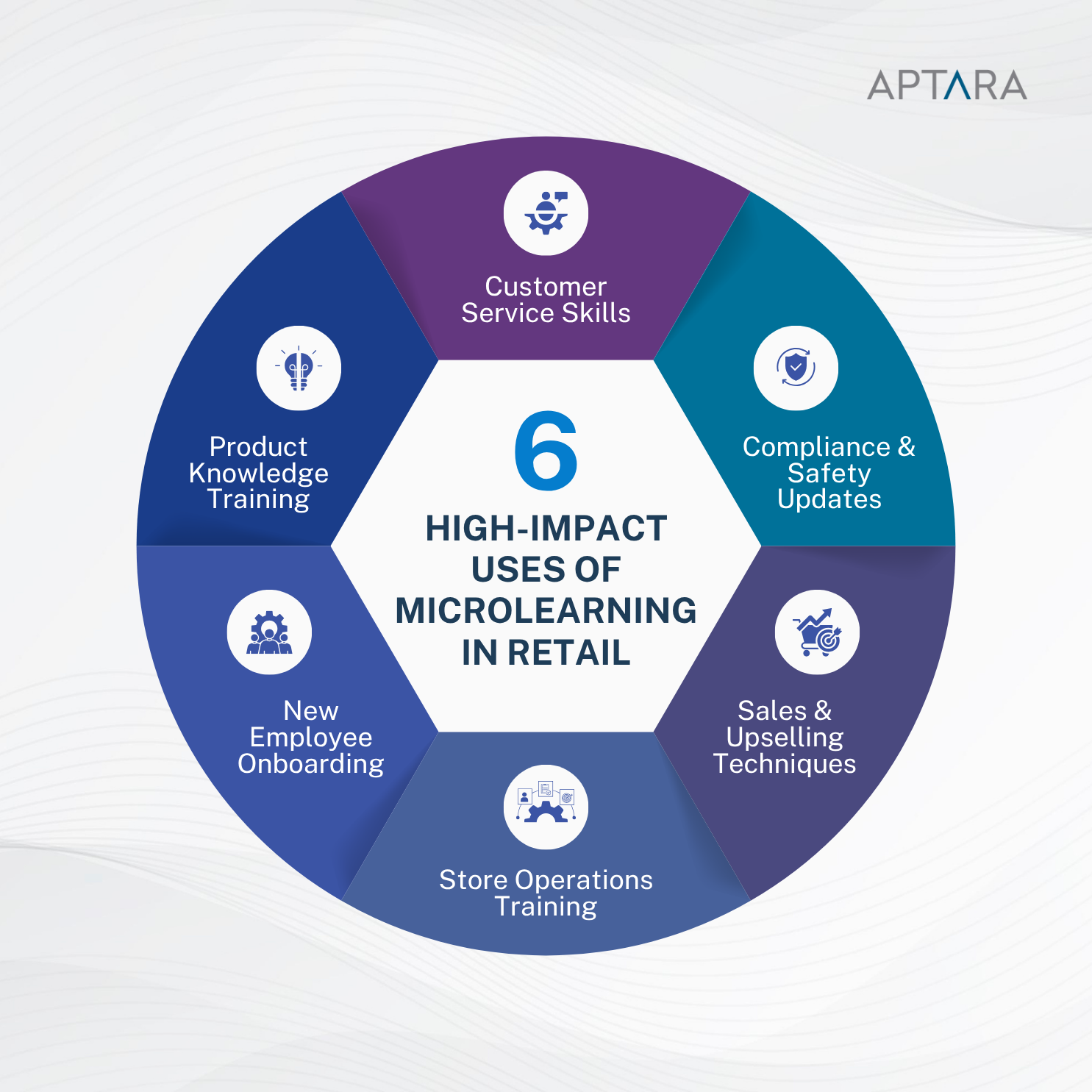
One of the most effective applications of microlearning is onboarding.
Retail organizations frequently face high employee turnover and seasonal hiring spikes. Bringing new employees up to speed quickly is essential.
Microlearning breaks onboarding into manageable milestones:
- Company culture and values
- Store policies and procedures
- Point-of-sale system training
- Customer interaction guidelines
- Product knowledge modules
Similarly, product training becomes more effective when delivered in short updates.
Instead of expecting employees to memorize extensive product catalogs, retailers can provide concise product-focused modules that explain features, benefits, selling points, and customer FAQs.
This helps employees build confidence while improving customer interactions.
Delivering Just-in-Time Learning on the Retail Floor
Modern retail training is increasingly moving from scheduled learning to performance support.
Frontline employees often need answers in the moment.
For example:
- A customer asks about a newly launched product.
- An associate needs clarification on a return policy.
- A manager introduces a new promotional campaign.
Mobile-first microlearning enables employees to access information instantly through smartphones or learning platforms.
This “just-in-time” learning model reduces dependency on managers and helps employees make informed decisions quickly.
As mobile technology becomes more integrated into workforce learning, retailers are increasingly viewing learning as an ongoing support system rather than a separate activity.
How Microlearning Improves Compliance and Operational Training
Compliance training is often viewed as mandatory rather than meaningful.
Microlearning helps change that perception.
Instead of requiring employees to complete lengthy annual courses, organizations can deliver short compliance modules throughout the year.
This approach supports:
- Workplace safety awareness
- Data privacy requirements
- Store security procedures
- Ethical conduct policies
- Regulatory updates
Frequent reinforcement ensures employees retain critical information and remain aligned with evolving requirements.
Operational training also benefits from this model, particularly when retailers introduce new processes, technologies, or store procedures.
Best Practices for Designing Effective Retail Microlearning Programs
Successful microlearning programs focus on simplicity and relevance.
- Keep Content Focused: Each module should address a single learning objective.
- Design for Mobile First: Frontline employees need learning experiences optimized for smartphones and tablets.
- Use Real Retail Scenarios: Scenario-based learning increases engagement and improves practical application.
- Reinforce Through Repetition: Spaced learning and periodic refreshers help strengthen retention.
- Track Performance Metrics: Measure completion rates, knowledge application, and business outcomes to continuously improve learning effectiveness.
Organizations that connect learning metrics with operational KPIs are more likely to demonstrate measurable business impact.
Final Thoughts
Retail employees operate in an environment where knowledge must be applied immediately, customer expectations evolve constantly, and time for formal training is limited. Microlearning addresses these realities by delivering focused, accessible, and actionable learning experiences that fit naturally into the flow of work.
From onboarding and product training to compliance and performance support, microlearning helps frontline employees learn faster, retain more, and perform better. As technology continues to reshape workforce development, microlearning is poised to become one of the most effective tools for building agile, knowledgeable, and customer-ready retail teams.